
.jpg)
.jpg)
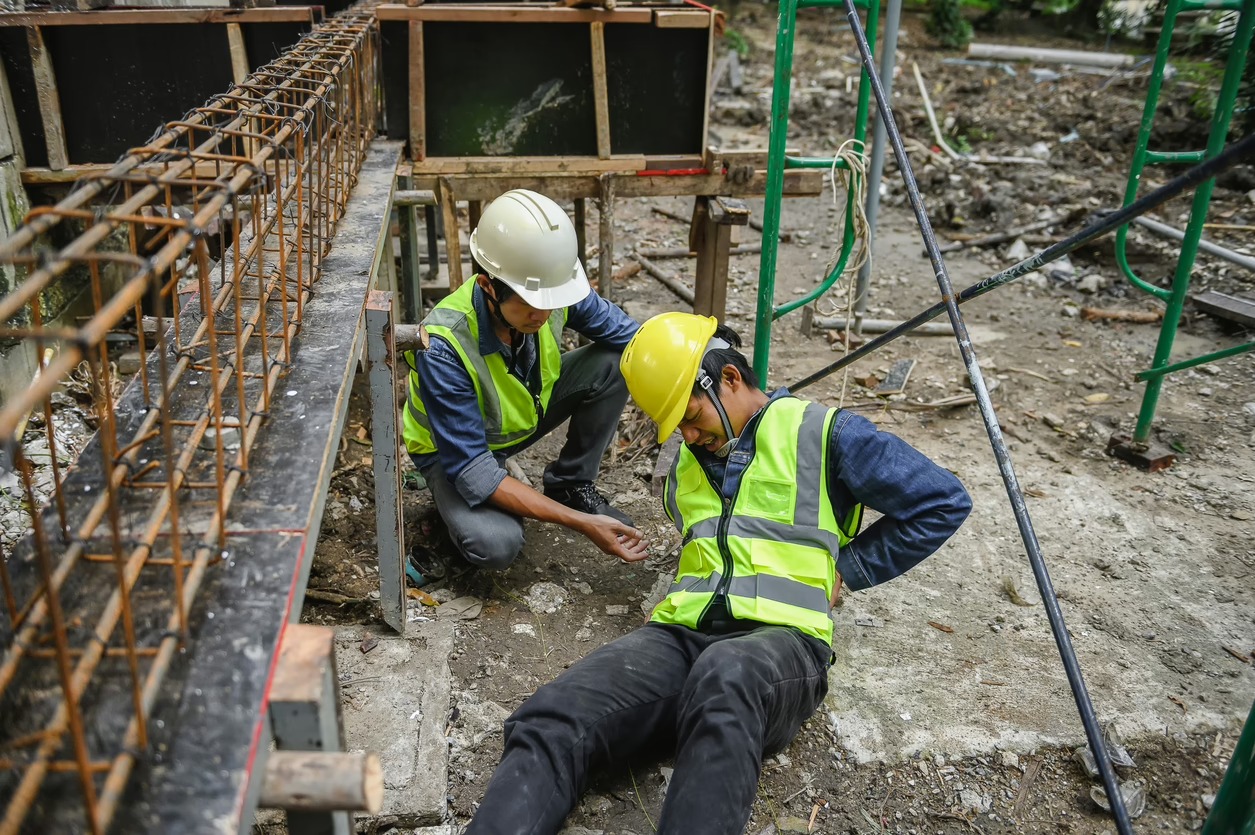
Understanding Workers’ Compensation
Workers’ compensation is a no-fault insurance system that benefits employees injured on the job, covering medical expenses and partial lost wages. However, it does not provide compensation for pain and suffering or other non-economic damages. Additionally, workers’ compensation typically shields employers from lawsuits, leaving injured workers unable to sue their employer for negligence in most cases. But what happens when someone other than your employer is responsible for your injury?What Is a Third-Party Claim?
A third-party claim arises when a party other than your employer or co-worker is responsible for your workplace injury. These claims allow injured workers to seek compensation beyond what workers’ compensation provides, covering pain and suffering, full lost wages, and additional medical expenses. Common third-party defendants include:- General Contractors or Subcontractors: If another contractor on the job site failed to maintain a safe work environment, leading to your injury.
- Equipment Manufacturers: If defective or malfunctioning equipment caused your injury.
- Property Owners: If unsafe property conditions contributed to the accident.
- Drivers: If you were injured in a vehicle collision while working.
Examples of Construction Site Third-Party Claims
Construction sites often involve multiple parties working simultaneously, which increases the likelihood of third-party liability. Common scenarios include:- Defective Equipment: An improperly designed or manufactured safety harness snaps, causing a fall.
- Negligent Subcontractors: A subcontractor fails to secure scaffolding properly, leading to a collapse that injures workers from another company.
- Unsafe Premises: A property owner neglects to address hazardous conditions, such as exposed wiring, resulting in an electrocution injury.
The Benefits of Pursuing a Third-Party Claim
While workers’ compensation provides some relief, it often falls short of covering the full financial and emotional impact of a serious injury. A third-party claim can help you recover:- Full medical costs, including future treatment needs.
- Total lost wages and reduced earning capacity.
- Compensation for pain, suffering, and emotional distress.
- Punitive damages in cases of extreme negligence.
How to File a Third-Party Claim
Filing a third-party claim involves a series of critical steps:- Consult an Attorney: Working with an experienced construction accident lawyer is essential. They will investigate the accident, identify liable parties, and guide you through the legal process.
- Gather Evidence: Collect accident reports, medical records, witness statements, and any documentation of unsafe conditions or defective equipment.
- File Within the Statute of Limitations: In Washington state, you have three years from the date of the accident to file a third-party claim.
- Coordinate with L&I: If you have received workers’ compensation benefits, the Washington State Department of Labor & Industries (L&I) may need to be reimbursed from any third-party recovery.
 Previous