
.jpg)
.jpg)
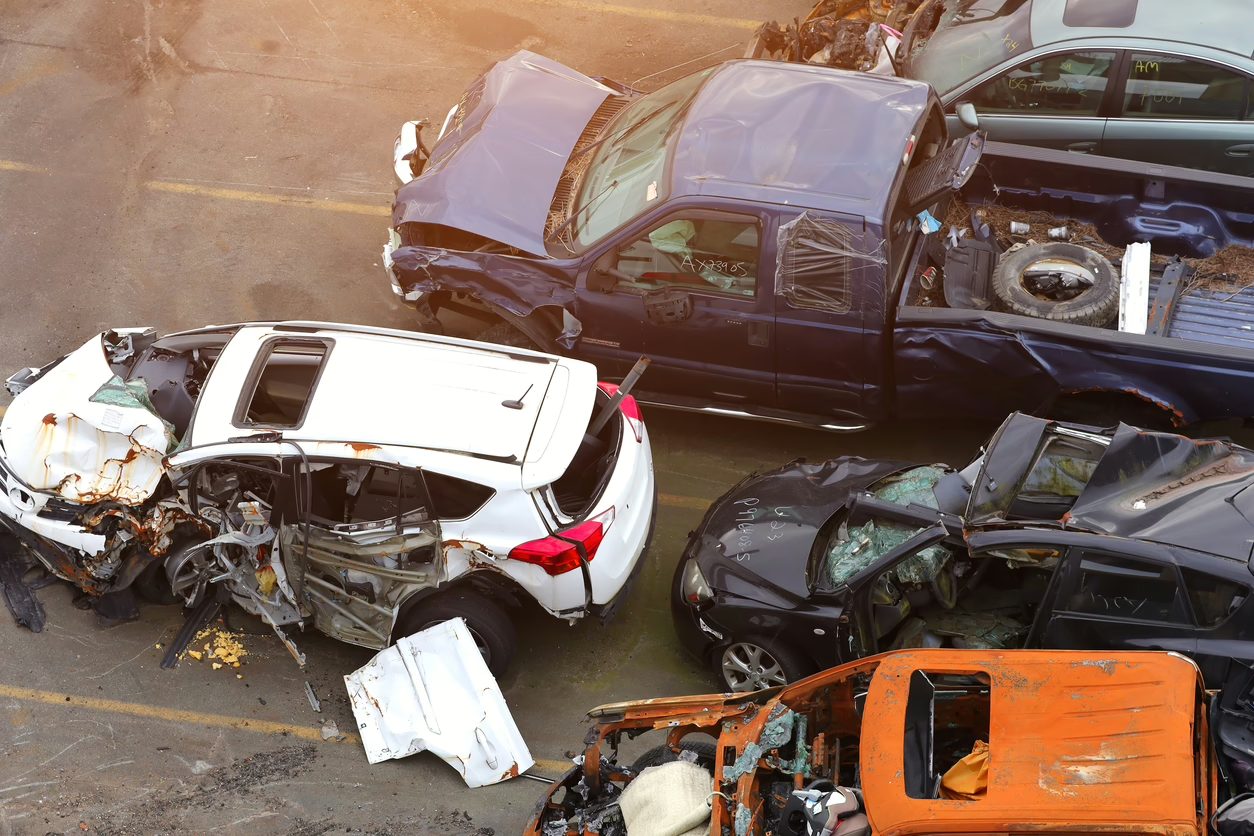
The Chain Reaction Problem
In Washington, fault in a car accident is determined by negligence, who failed to use reasonable care. In a multi-car pileup, there’s rarely one negligent act. Maybe a driver was speeding on slick roads. Maybe another was distracted. Maybe someone slammed their brakes too late in heavy fog. Every action compounds, and each driver’s behavior affects the outcome for the others. Law enforcement reconstructs these crashes by reviewing impact points, traffic camera footage, dash cams, and eyewitness reports. They’ll ask:- Whose actions triggered the first collision?
- Were others driving too fast for weather conditions?
- Were drivers maintaining a safe following distance?
Washington’s Comparative Negligence Law
Washington follows a pure comparative negligence system (RCW 4.22.005). That means even if you’re partly responsible, you can still recover damages, your compensation just gets reduced by your percentage of fault. For example: If your damages total $100,000 but you’re found 25% at fault, you can still recover $75,000. It’s a fair system on paper, but in practice, it gives insurance companies a powerful weapon, they’ll argue your share of fault should be as high as possible to minimize what they owe.Why Determining Fault Is So Difficult
Unlike a two-car crash, multi-vehicle accidents often involve:- Limited visibility: Fog, ice, or heavy rain make it nearly impossible to gauge distances or braking times.
- Multiple points of impact: Vehicles may be hit from several directions, blurring cause and effect.
- Conflicting statements: Each driver recalls a slightly different version of events.
- Delayed chain reactions: Sometimes drivers collide several seconds after the initial crash, yet are still pulled into the legal aftermath.
Protecting Yourself After a Pileup
If you’re caught in a multi-car accident, what you do next can affect your safety, your health, and your legal standing.- Stay inside your vehicle with your seatbelt fastened until law enforcement clears the scene.
- Turn on hazard lights to make yourself visible to oncoming traffic.
- Call 911 immediately, even if your injuries seem minor. Adrenaline masks pain.
- Document everything: photos, videos, license plates, road conditions, witness statements.
- Avoid admitting fault. Even casual remarks like “I didn’t see them in time” can be used against you later.
- Notify your insurance provider as soon as possible, but avoid recorded statements until you’ve spoken with a lawyer.
How Attorneys Establish Liability
An experienced Washington car accident lawyer doesn’t rely on assumptions. They’ll:- Obtain and analyze police and accident reconstruction reports
- Collect dashcam or surveillance footage
- Subpoena phone records to prove distraction or impairment
- Work with accident reconstruction experts to build a precise timeline
What If You’re Partially at Fault?
Even if you believe you might’ve made a mistake, braked too late, followed too closely, or swerved into another lane, you still have rights. Under Washington’s pure comparative fault rule, you may still be entitled to significant compensation for:- Medical expenses and rehabilitation
- Lost wages or reduced earning capacity
- Pain and suffering
- Property damage
- Emotional distress
Preventing Multi-Car Accidents
You can’t control every driver on the road, but you can reduce your risk:- Maintain at least three seconds of following distance, double in rain or fog.
- Slow down on icy bridges and shaded areas, where black ice forms first.
- Keep your headlights and taillights clean and bright.
- Avoid sudden lane changes or hard braking in poor visibility.
- Never drive distracted, just two seconds looking down can be the difference between stopping in time or starting a pileup.
 Previous