
.jpg)
.jpg)
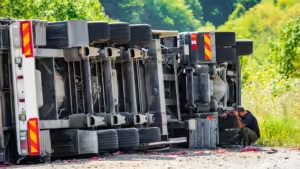
What Is a Jackknife or Rollover Truck Accident?
- Jackknife accident: Occurs when the trailer of a truck swings out at an angle to the cab, forming an “L” or “V” shape, often blocking multiple lanes.
- Rollover accident: Happens when a truck tips or rolls onto its side, frequently due to high speeds, sudden maneuvers, or shifting loads.
Common Causes of Jackknife and Rollover Crashes
Several preventable factors can lead to a jackknife or rollover accident, including:- Excessive speed, especially on curves or wet roads
- Sudden or improper braking, especially with improperly maintained brakes
- Unbalanced or unsecured loads, which can shift and destabilize the truck
- Driver fatigue, a major issue in the long-haul trucking industry
- Inexperienced or undertrained drivers, who may not know how to handle emergencies
- Poor weather conditions, such as ice, snow, or slick roads
- Mechanical failures, such as tire blowouts or faulty suspension systems
Injuries Commonly Sustained in These Accidents
The size and force of a commercial truck crash can result in severe, often permanent injuries:- Traumatic Brain Injuries (TBI) – Can lead to long-term cognitive and emotional issues
- Spinal Cord Injuries – May cause partial or full paralysis
- Broken Bones – Especially in the ribs, arms, legs, or pelvis
- Internal Organ Damage – Including bleeding or damage to the liver, kidneys, or spleen
- Lacerations and Soft Tissue Injuries – Often from shattered glass or debris
- Psychological Trauma – Many victims experience PTSD, anxiety, or depression
What to Do After a Jackknife or Rollover Truck Accident
- Seek Immediate Medical Attention Even if you don’t feel injured right away, some injuries—like internal bleeding or concussions—can worsen over time. Visit a hospital or urgent care as soon as possible.
- Call 911 and Report the Crash Always report the accident to law enforcement. A police report serves as a critical piece of evidence in your case.
- Document the Scene (If Safe) If you’re able, take photos of the vehicles, road conditions, skid marks, and any visible injuries. Collect contact info from witnesses and the truck driver.
- Avoid Discussing Fault at the Scene Keep your statements to the police factual. Do not admit fault or speculate about what happened.
- Notify Your Insurance Company Let your insurer know about the crash—but avoid recorded statements until you’ve spoken with an attorney.
- Keep All Records and Receipts Document medical visits, missed work, repair estimates, and any expenses related to the accident.
- Speak With a Truck Accident Lawyer These cases are highly complex. You may be dealing with multiple liable parties—from the truck driver to the trucking company, maintenance crews, or manufacturers. A skilled attorney can help you navigate the legal process and maximize your compensation.
Who Can Be Held Liable?
Liability in jackknife and rollover crashes is rarely straightforward. At Abeyta Nelson Injury Law, we investigate all angles of your case to identify potentially responsible parties, such as:- The truck driver, for speeding or negligent driving
- The trucking company, for poor training or pressuring drivers to meet unrealistic deadlines
- Cargo loaders, for improperly securing freight
- Truck or parts manufacturers, if mechanical failure played a role
What Compensation Can You Recover?
If you’ve been hurt in a jackknife or rollover crash, you may be eligible to recover damages for:- Medical bills (including future treatment)
- Lost wages and diminished earning capacity
- Pain and suffering
- Emotional distress and trauma
- Vehicle and property damage
- Wrongful death benefits (if applicable)
 Previous