
.jpg)
.jpg)
What Counts as Distracted Driving?
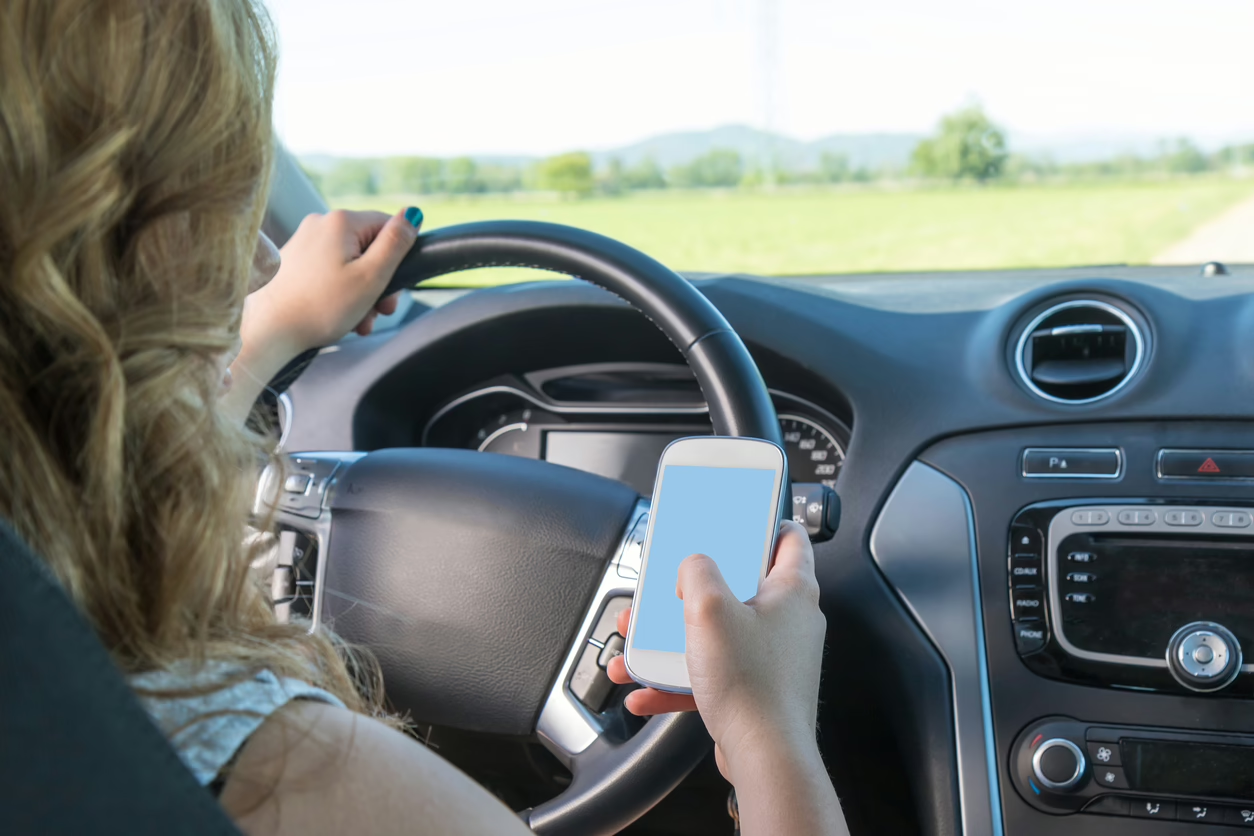
Distracted driving means doing anything that takes your eyes, hands, or mind off driving safely. The National Highway Traffic Safety Administration (NHTSA) breaks it into three categories:- Visual distractions: looking away from the road (reading texts, checking GPS, glancing at passengers).
- Manual distractions: taking your hands off the wheel (eating, reaching for items, using a phone).
- Cognitive distractions: losing mental focus (daydreaming, talking, stress, or fatigue).
Why Proving Distraction Matters
After a crash, insurance companies decide fault based on negligence, the failure to act as a reasonable driver would. Distracted driving is a textbook example of negligence. If you can prove the other driver was texting, calling, eating, or otherwise distracted, your claim becomes far stronger. That evidence can help you recover compensation for:- Medical bills and future treatment
- Lost wages and reduced earning capacity
- Pain and emotional distress
- Vehicle repair or replacement
Step 1: Secure the Scene Immediately
Your first priority after any crash is safety. Once you’ve moved to a safe spot and called 911, start collecting evidence while the scene is still fresh.- Take photos and videos: Capture every detail, the position of vehicles, skid marks (or lack thereof), road debris, traffic signals, and damage patterns. If it’s safe, photograph inside the other driver’s vehicle. An open fast-food container, spilled coffee, or a lit phone screen could become critical clues.
- Write down everything: Record the exact time, weather, and location. Note if the driver seemed distracted, apologetic, or disoriented. Even small observations, like the glow of a phone screen in their hand, can strengthen your case later.
- Look for cameras: Identify traffic cams, business security cameras, or doorbell cameras nearby. Most footage is deleted within days, so time is everything.
Step 2: Gather Witness Statements
Eyewitnesses are often the missing link in proving distraction. They may have seen the driver holding a phone, looking down, eating, or failing to brake. Ask for contact information and encourage them to describe exactly what they saw. A neutral third-party statement carries enormous weight with insurers and juries.Step 3: Get the Police Report
Police officers who respond to the crash document key details. The report may not explicitly say “distracted driving,” but look for hints:- The driver admitted to being on their phone.
- The officer noted inattentive behavior or no braking before impact.
- The driver was cited for texting or illegal phone use.
Step 4: Preserve Video Footage
In today’s world, cameras are everywhere. That’s good news for your case. Potential video sources include:- Traffic cameras at intersections
- Security cameras on nearby businesses or homes
- Dashcams, either yours or other drivers’
Step 5: Obtain Cell Phone Records
Cell phone data is one of the strongest ways to prove texting-while-driving. The records can reveal if a call, text, or app activity occurred moments before the crash. These logs aren’t public, you’ll need a lawyer to request them through a subpoena or court order. If timestamps align with the crash, that’s irrefutable evidence of distraction. In some cases, digital forensics can also uncover:- Screen unlock times
- Social media use
- GPS navigation activity
Every data point helps establish the timeline.
Step 6: Check Social Media and Digital Activity
People often document their lives in real time, including the moments leading up to a crash. Posts, likes, or comments made at the exact accident time can confirm the driver was online instead of driving. A skilled attorney can capture screenshots, metadata, and timestamps before posts are deleted. Combined with phone records, this creates a clear digital paper trail.Step 7: Pull Vehicle “Black Box” Data
Most newer vehicles contain an Event Data Recorder (EDR), the automotive version of a black box. It logs speed, braking, steering, and seatbelt usage seconds before impact. If the EDR shows no attempt to brake or swerve, it supports the claim that the driver wasn’t paying attention. Some models also record infotainment usage, showing if the driver interacted with the touchscreen or Bluetooth during the crash. Your attorney can work with reconstruction experts to extract and interpret this data properly.Step 8: Understand Distracted Driving Laws
Knowing your state’s phone-use laws can turn your evidence into a solid negligence claim.RCW 46.61.672 – Using a Personal Electronic Device While Driving
This is Washington’s primary distracted driving law. It states, “A person who uses a personal electronic device while driving a motor vehicle on a public highway is guilty of a traffic infraction.”- Covers holding or using a phone for calls, texting, or social media while driving, even when stopped at a light.
- Fines start at $145 for the first offense and $243 for the second within five years.
- Violations are reported to insurance companies and can affect premiums.
- It applies to all devices, including phones, tablets, and laptops.
RCW 46.61.673 – Dangerously Distracted Driving
- Allows officers to cite drivers who commit another traffic violation while distracted by any activity (e.g., eating, grooming, etc.).
- This is a secondary offense, but it strengthens negligence arguments in civil lawsuits.
Step 9: Identify Common Signs of Distraction
Even without direct proof, certain behaviors scream “distracted driving.” These include:- Drifting or weaving between lanes
- Rear-ending another vehicle without braking
- Running red lights or stop signs
- Speed changes for no reason
- Driver looking down or appearing startled at impact
Step 10: Hire an Experienced Car Accident Attorney
Proving distraction is rarely simple. It takes subpoenas, technical know-how, and fast action to preserve evidence. A seasoned car accident lawyer will:- Send letters to preserve phone and video data
- Obtain cell and vehicle records through court orders
- Interview witnesses and collect sworn statements
- Work with accident reconstruction and digital forensics experts
- Negotiate directly with insurance companies
- File a lawsuit if the insurer lowballs or denies your claim
What If the Police Report Doesn’t Mention Distraction?
It happens often. Unless the driver admits fault or an officer catches them using a phone, reports might simply state “rear-end collision” or “failure to yield.” That doesn’t mean distraction wasn’t a factor. Attorneys can uncover new evidence, cell data, video, or witness accounts that go far beyond what’s in the report.How Proving Distraction Strengthens Your Case
Once distraction is proven, it changes everything. The case shifts from a “he-said-she-said” argument to hard evidence of negligence. That can lead to:- Higher settlement values: Insurers know they’ll lose in court if you can prove illegal or reckless phone use.
- Punitive damages: In extreme cases, like texting through a red light, a jury can award additional damages to punish the behavior.
- Stronger negotiation leverage: Evidence of distraction forces insurers to settle faster and for more.
Comparative Negligence: What if You Were Partly at Fault?
Even if you think you might share some blame, you can still recover compensation under comparative negligence laws. In states like Maine, you can receive damages as long as you’re less than 50% at fault. For example:- You’re found 10% responsible (maybe you were slightly over the speed limit).
- The other driver is 90% at fault for texting.
- If your total damages are $100,000, you can still recover $90,000.
Time Is Critical, Act Fast
Every minute counts after a crash. Video gets erased, phone data disappears, and memories fade. If you wait, crucial evidence could vanish forever. An attorney can immediately launch an investigation, issue preservation orders, and contact witnesses before insurance adjusters start building their defense. The sooner you act, the stronger your case.What a Legal Investigation Looks Like
A thorough attorney-led investigation may include:- Visiting the crash site to collect debris and measure skid distances
- Photographing both vehicles and retrieving onboard computer data
- Interviewing first responders and witnesses
- Reviewing phone records, surveillance video, and dashcam footage
- Reconstructing the accident using physics-based modeling
- Consulting digital experts to analyze infotainment or GPS data
 Previous